
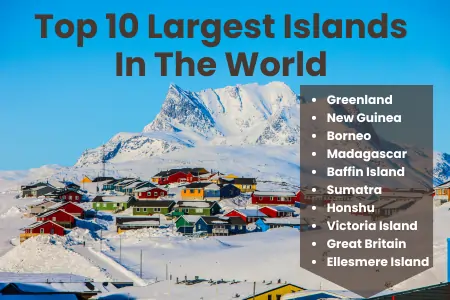



Islands aren’t just small tropical getaways. Some of the world’s largest landmasses surrounded by water are larger than entire countries. A mass of land surrounded on all sides by water is called an island. A person who lives on an island is called an islander. Islands are also nations themselves that have an economy, population, and their own distinct culture, like Java or Indonesia, while some islands are barren and deserted due to several reasons.Here’s a look at the top 10 largest islands in the world .
Factors to consider in classifying largest Islands
Islands can be classified in different ways based on their features, such as area, location, origin, physical characteristics, and human presence.
For this list, I have considered the size or area of islands as the primary factor. Based on their size, islands can generally be divided into two categories:
- Large Islands – Vast landmasses that often support diverse ecosystems (e.g., Madagascar, Borneo).
- Small Islands – Small land areas or islets with limited resources and space (e.g., Nauru, Bora Bora).
Top 10 largest islands in the world
You will find a list of the top ten islands as per the size and area, along with their important features. They are as follows:
1. Greenland
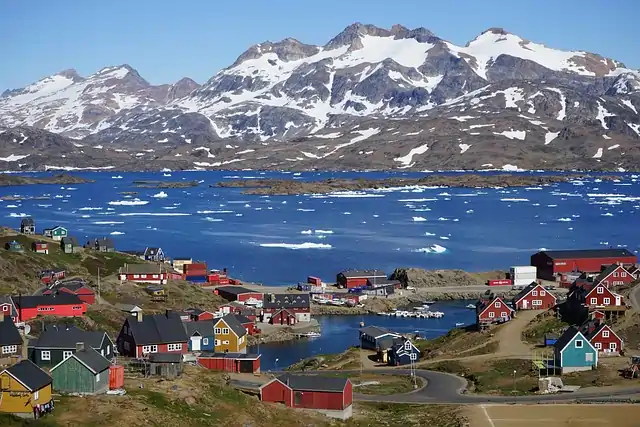
Greenland is located in the Arctic Ocean and is the largest island in the world. Covered by solid ice sheets, it is known for its breathtaking glaciers, auroras and Inuit cultures. It belongs to Denmark, but has its own government. Most people live on ice-free coasts because the interior is too cold.
- Location: Northern Hemisphere in
- Size: 2,166,086 sq km
- Geographic Features: World’s largest island, covered mostly by ice; Arctic tundra, glaciers, and fjords.
- Currency: Danish Krone (DKK)
- Prime Locations:
- Ilulissat Icefjord: Stunning icebergs and glaciers
- Nuku: The capital city with colourful houses and museums
- Disko Island – Dramatic cliffs and hot springs
- Notable Dishes:
- Suaasat: Traditional seal soup
- Mattak: Raw whale skin and blubber
- Kiviak: Fermented seabird delicacy
2. New Guinea
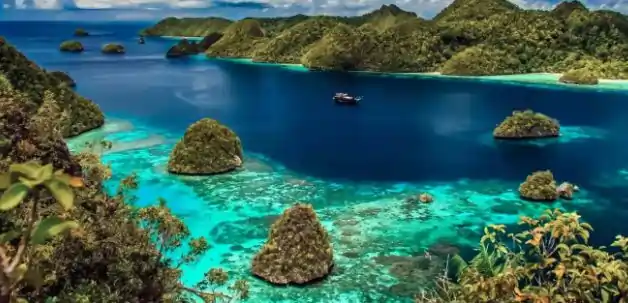
In the Pacific Ocean, New Guinea is the second-largest island, divided into Indonesia (West Papua) and Papua New Guinea. It is famous for its rare wildlife, including tropical rainforests, diverse tribal cultures and bird paradise. The island is home to some of the world’s most isolated indigenous groups.
- Location: Southern Hemisphere
- Size: 785,753 sq km
- Geographic Features: Mountain ranges, dense rainforests, diverse wildlife (like the Bird of Paradise).
- Currency: Papua New Guinean Kina (PGK) & Indonesian Rupiah (IDR) (Island is split between Papua New Guinea and Indonesia)
- Prime Locations:
- Kokoda Track – Historic trekking route
- Raja Ampat Islands – Pristine diving spots
- Mount Wilhelm – Highest peak in Papua New Guinea
- Notable Dishes:
- Mumu – Traditional baked feast with pork, vegetables, and coconut
- Saksak – Sago dumplings in coconut milk
- Ikan Bakar – Grilled fish with Indonesian spices
3. Borneo
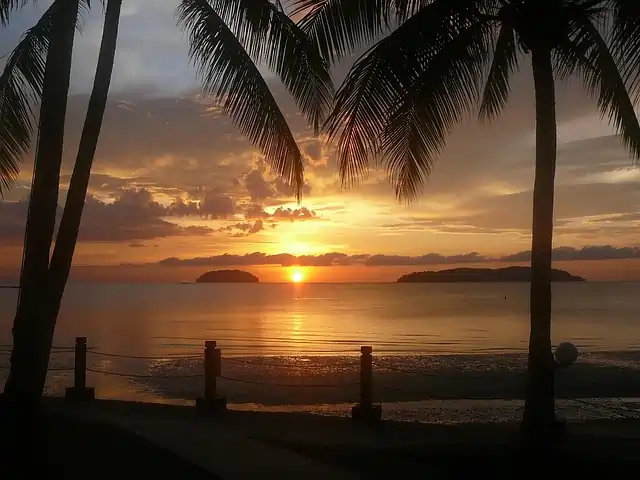
Borneo is the only island shared by three countries: Indonesia, Malaysia and Brunei. It is famous for its dense rainforests, Oran Tan and Mount Kinabalu. Borneo has some of the oldest forests on the planet, and many endangered species. It is located in the Pacific Ocean.
- Location: Equator
- Size: 748,168 sq km
- Geographic Features: Rainforests, orangutans, rivers, and mountains; shared by Malaysia, Indonesia, and Brunei.
- Currency: Malaysian Ringgit (MYR), Indonesian Rupiah (IDR), Brunei Dollar (BND)
- Prime Locations:
- Kinabalu National Park – Home to Mount Kinabalu
- Sepilok Orangutan Rehabilitation Centre – Wildlife sanctuary
- Mulu Caves – Massive limestone caves
- Notable Dishes:
- Nasi Lemak – Coconut rice with sambal and anchovies
- Manok Pansoh – Chicken cooked in bamboo
- Laksa Sarawak – Spicy noodle soup with prawns
4. Madagascar
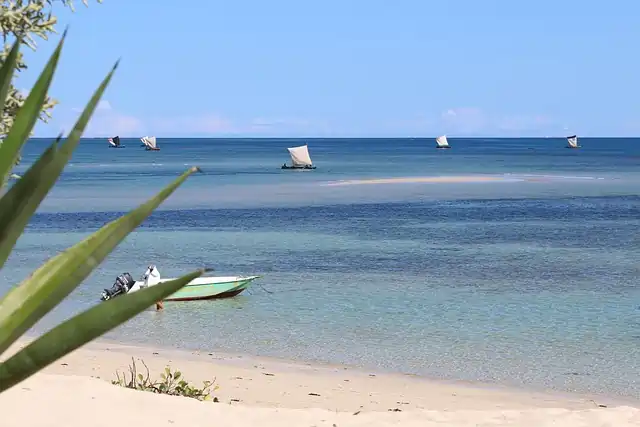
Madagascar, located in the Indian Ocean, is famous for its unique wildlife, including lemurs, baobab trees, and colorful chameleons. It has been separated from Africa for millions of years, so most of its plants and animals have not been found anywhere else on Earth. The island also boasts beautiful beaches and rich cultural heritage.
- Location: Southern Hemisphere
- Size: 587,041 sq km
- Geographic Features: Unique biodiversity, baobab trees, lemurs, rainforests, and beaches.
- Currency: Malagasy Ariary (MGA)
- Prime Locations:
- Avenue of the Baobabs – Stunning ancient trees
- Tsingy de Bemaraha – Unique limestone formations
- Nosy Be – Beautiful tropical island
- Notable Dishes:
- Romazava – Meat and leafy green stew
- Mofo Gasy – Sweet rice pancakes
- Akoho sy Voanio – Chicken in coconut sauce
5. Baffin Island, Canada
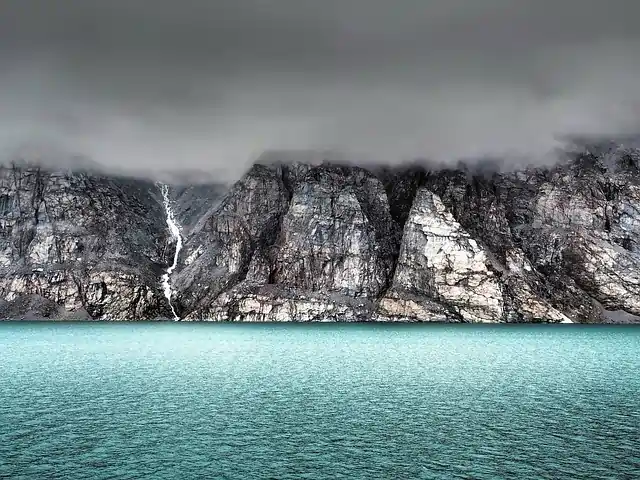
Baffin Island, situated in the Arctic Ocean, is the largest island in Canada. It is renowned for its dramatic fjords, polar bear habitat, and vibrant Inuit communities.The island experiences freezing temperatures and is a great place to see the aurora and the Arctic fauna.
- Location: Northern Hemisphere
- Size: 507,451 sq km
- Geographic Features: Arctic landscapes, fjords, glaciers, and Inuit communities.
- Currency: Canadian Dollar (CAD)
- Prime Locations:
- Auyuittuq National Park – Glaciers and fjords
- Pond Inlet – Stunning Arctic scenery
- Sirmilik National Park – Wildlife like polar bears and narwhals
- Notable Dishes:
- Caribou Stew – Hearty and warming dish
- Arctic Char – Cold-water fish, often smoked
- Bannock – Indigenous flatbread
6. Sumatra, Indonesia
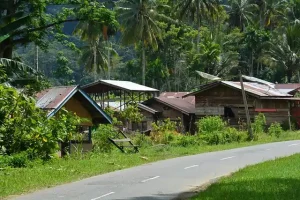
Sumatra, located in the Indian Ocean, is one of the largest islands in Indonesia. It is renowned for its active volcanoes, dense rainforests, and rare wildlife, including the Sumatran tiger and orangutan.The island also has beautiful lakes, such as Lake Toba, which was formed by a large volcanic eruption.
- Location: Southern Hemisphere
- Size: 473,481 sq km
- Geographic Features: Rainforests, active volcanoes, lakes, and diverse wildlife (like tigers and orangutans).
- Currency: Indonesian Rupiah (IDR)
- Prime Locations:
- Lake Toba – Largest volcanic lake in the world
- Bukit Lawang – Orangutan sanctuary
- Mount Kerinci – Tallest volcano in Indonesia
- Notable Dishes:
- Rendang – Slow-cooked spicy beef dish
- Nasi Padang – Rice with various rich curries
- Martabak – Sweet or savory stuffed pancake
7. Honshu, Japan
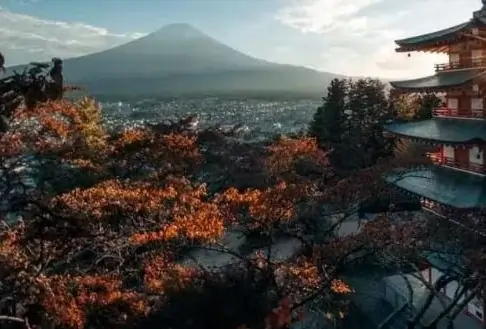
Honshu in the Pacific Ocean is the main island and the largest and most important Japanese island. There are major cities such as Tokyo, Kyoto and Osaka, as well as the legendary volcanoes of Mount Fuji in Japan. Osaka serves as a vibrant cultural and economic center of Japan, where sleek skyscrapers stand alongside centuries-old temples.
- Location: Northern Hemisphere
- Size: 227,960 sq km
- Geographic Features: Mountains (including Mount Fuji), rivers, coastal cities, and cultural landmarks.
- Currency: Japanese Yen (JPY)
- Prime Locations:
- Mount Fuji – Japan’s iconic volcano
- Kyoto – Famous for temples and cherry blossoms
- Tokyo – The bustling capital city
- Notable Dishes:
- Sushi – Vinegared rice with fresh fish
- Ramen – Noodle soup with rich broth
- Okonomiyaki – Savory pancake with cabbage and meat
8. Victoria Island, Canada

Situated in the Arctic Ocean, Victoria Island is one of Canada’s remote northern islands, recognized for its frozen landscapes, diverse Arctic fauna, and Inuit settlements. The island has long, intense winters, and only a few people live there. It’s a great place for scientists studying climate change.
- Location: Northern Hemisphere
- Size: 217,291 sq km
- Geographic Features: Arctic tundra, glacial landscapes, remote wildlife.
- Currency: Canadian Dollar (CAD)
- Prime Locations:
- Cambridge Bay – Inuit culture and Arctic scenery
- Prince Albert Sound – Stunning coastal landscapes
- Tahiryuaq (Ferguson Lake) – Pristine freshwater lake
- Notable Dishes:
- Muktuk – Whale skin and blubber
- Pemmican – Dried meat and berries
- Smoked Arctic Char – Popular cold-water fish
9. Great Britain, United Kingdom
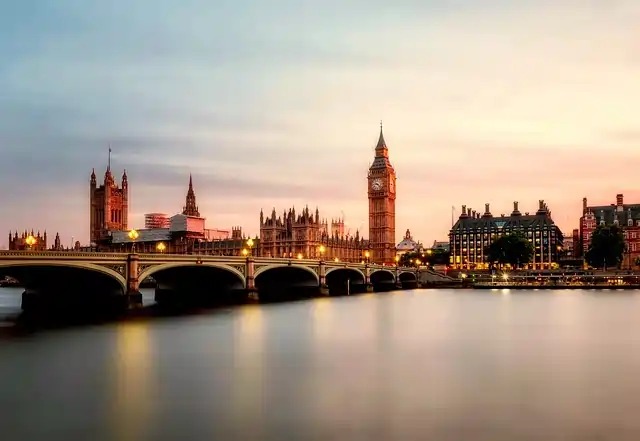
Great Britain in the Atlantic Ocean is the largest island in Europe. There are famous tourist attractions in England, Scotland and Wales, including Big Ben, Stonehenge and Edinburgh Castle. London is located here, one of the most important cities in the world.
- Location: Northern Hemisphere
- Size: 209,331 sq km
- Geographic Features: Rolling hills, rivers, coastal cliffs, and major cities.
- Currency: British Pound Sterling (GBP)
- Prime Locations:
- London – Big Ben, Buckingham Palace
- Edinburgh – Historic castles and landscapes
- Stonehenge – Mysterious prehistoric monument
- Notable Dishes:
- Fish and Chips – Deep-fried fish with fries
- Full English Breakfast – Eggs, sausages, beans, and toast
- Shepherd’s Pie – Meat and mashed potato dish
10. Ellesmere Island, Canada
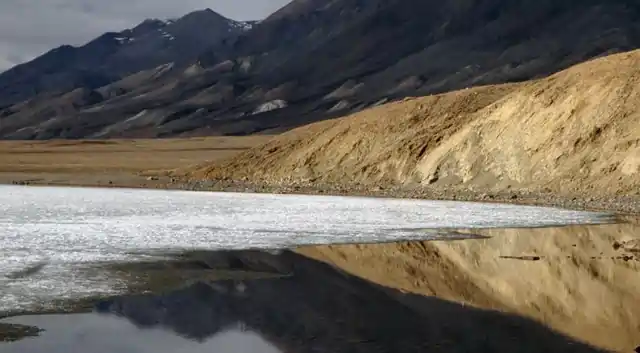
Ellesmere Island is one of the coldest and maximum foreign places on Earth. It has big glaciers, polar bears, and Canada’s northernmost human settlement. The island is normally protected in ice and is a famous spot for Arctic explorers and researchers. It is located in the Arctic Ocean.
- Location: Northern Hemisphere
- Size: 196,236 sq km
- Geographic Features: Arctic landscapes, glaciers, and polar wildlife.
- Currency: Canadian Dollar (CAD)
- Prime Locations:
- Quttinirpaaq National Park – Ice caps and remote wilderness
- Alert – Northernmost inhabited place
- Tanquary Fiord – Stunning fjord scenery
- Notable Dishes:
- Arctic Hare Stew – Traditional Inuit dish
- Bannock – Simple Indigenous bread
- Seal Meat – A staple protein in Inuit communities
Which islands should I visit?
If we look into the economic and touristic aspects, you should visit the following islands:
1. Great Britain, UK for everything whether job, business, tourism or immigration
2. Sumatra, Indonesia, for its beaches, temples, and food.
3. Honshu, Japan for its cherry blossoms and Buddhist temples.
4. Greenland for its Northern Lights and Arctic landscapes.

Leave a Reply